Mod subculture
Suits, scooters, and a generation that refused to wait for the future.

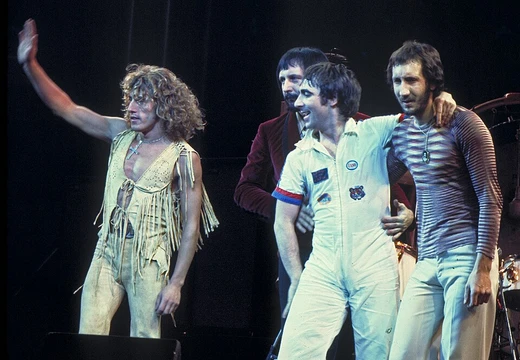
The mod subculture was the beating heart of The Who's early identity. In the early 1960s, London's youth scene coalesced around a distinct aesthetic — sharp tailored suits, slicked-back hair, Vespa scooters, and an obsessive devotion to rhythm and blues and soul music. The Who, particularly Pete Townshend, grew up inside this world, and their first years as a band were inseparable from the mod clubs, the fashion, and the restless energy of that London youth movement.
For fans, the mod era represents The Who at their most youthful and electric — before the leather jackets, before the rock opera, before the stadium spectacle. It is the period when four young men in pressed suits could make a room of teenagers feel like the future had already arrived, and when a single chord change could become a generational rallying cry. The mod connection is not merely a historical footnote; it is the emotional soil from which the band's myth grew.
- Associated band
- The Who (early period)
- Era
- Early 1960s
- Geographic center
- London, England
- Key figure
- Pete Townshend (lead guitarist, principal songwriter)
- Signature anthem
- "My Generation" (1965)
- Cultural sphere
- British youth fashion, R&B/soul music, scooter culture
- Band's visual signature
- Tailored suits, slicked-back hair, later transitioning to leather jackets
Lore & Background
The mod scene was never a single, monolithic movement. It was a constellation of clubs, record shops, tailors, and young people who shared a taste for the sharper, cleaner, more sophisticated end of British youth culture. Where the rockers wanted leather and greasy hair, the mods wanted a perfectly cut suit and a record of Otis Redding or the Specials. The Who sat squarely in this world. Townshend's early look — the immaculate hair, the pressed jackets, the almost aggressive neatness — was not a costume. It was the uniform of the community he grew up in, the visual language of Crouch End and Stoke Newington in the early sixties.
The music they played in those first years was filtered through that mod sensibility. The Who's early setlists drew heavily on the American R&B and soul catalogue that mod clubs championed, and their own compositions carried a crisp, angular precision that felt like a suit jacket cut from feedback. When they broke through in 1965, it was not as a generic British Invasion act. They arrived as the mod scene's house band, the group that understood the specific electricity of a packed London club where everyone was eighteen and the air smelled of cheap perfume and amplifier heat.
The transition away from the mod image was gradual but decisive. As the band's sound grew louder, more confrontational, more physically violent in its stagecraft, the suits gave way to the leather jackets and the power chords. The mod era did not die so much as it was outgrown, absorbed into the larger mythology of the band. But for fans who trace The Who's story back to its roots, that early mod energy remains the purest distillation of what made the band feel like a living, breathing community rather than a product.
In Their Own Story
It is a Thursday night in the winter of 1964. The club is small, the kind of place where the ceiling is low enough that the smoke from a dozen cigarette ends hangs in a visible layer just above the heads of the crowd. Four young men stand at the front in suits that cost more than most of the audience makes in a week. The bassist thumps a groove that makes the floorboards shudder. The guitarist, hair combed back with a severity that looks almost angry, launches into a riff that is not quite a riff, not quite a melody, but something that makes the back of your neck prickle. Around you, boys in matching jackets and girls with sharp cheekbones sway in a way that is not quite dancing. Someone in the corner is trying to get a record player to work. The air is thick, warm, electric. The guitarist rips his pick off his finger and tosses it into the crowd. For one suspended second, the whole room holds its breath. Then the next chord hits, and the room detonates. You are seventeen. You will never feel this particular kind of electricity again, and you will spend the next fifty years trying to explain it.
Reader's Guide
Legend says the mod connection was never just fashion. Fans who have seen the early bootlegs and the old club footage talk about the *posture* — the way the band stood in those first years, shoulders squared, chins up, suits immaculate even after an hour of screaming. It was a declaration. You did not slouch. You did not mumble. You showed up in a pressed jacket and played like the walls were going to fall. That discipline, that almost military neatness behind the chaos, is what separated The Who from the other R&B bands playing the same mod clubs. They were the mods' band, and they played like it.
Another story fans pass down, told with a kind of reverent grin, is about the visual break. The moment the suits came off and the leather jackets went on. It was not a single night. It was a slow shedding, show by show, as the music got louder and the stagecraft got more physical. But the fans who were there in the mod era remember the *before* with a specific tenderness. The suits. The hair. The way a chord change in a three-piece suit could hit harder than anything in a leather jacket. That image — clean, sharp, young, furious — is the one that lives in the mythology. It is The Who before The Who, and for a lot of people, it is the version that still hits the hardest.
And then there is the scooter. Not on stage, never on stage, but in the stories. The image of a mod kid on a Lambretta, suit flapping in the wind, heading to a club where The Who are playing, headphones around the neck, a sleeve of Otis Redding under one arm. That is the world the band grew out of. You do not need to have been there. You need to have felt, even once, that a Tuesday night in a small room could be the most important night of your life. That is the mod inheritance. That is what the early Who gave you.
Did You Know?
- Pete Townshend's early public image — the slicked-back hair, the tailored suits, the almost severe neatness — was not a performance choice but a reflection of the mod community he grew up in around London's north-east su
- The Who's early setlists were built around the American R&B and soul catalogue that mod clubs championed, meaning the band's foundational sound was shaped as much by the mod scene's record collections as by their own son
- The transition from the mod suit aesthetic to the leather-jacket 'power' image was gradual and show-by-show, not a single dramatic break, and fans of the early era often describe the mod-era band as a distinct, almost se
- The mod subculture's emphasis on fashion, music, and community identity gave The Who's early fanbase a shared visual and cultural language that went well beyond simply liking the songs, creating a sense of belonging that
More in Lore & Legacy
Elsewhere in the The Who universe
Spotted an error? Know more?
This is a living reference — every entry is fact-audited, and reader corrections feed straight into our audit queue. Suggest an edit · See this site's audit record