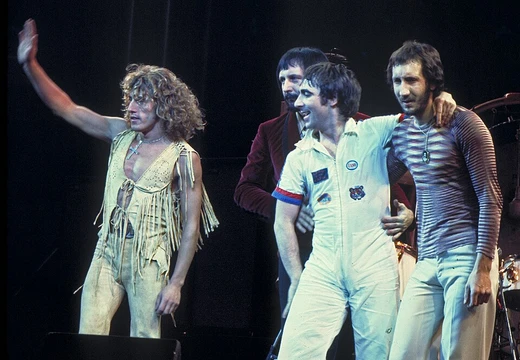
Pinball Wizard
A boy, a machine, and a rhythm so fast the whole world can't keep up.

Pinball Wizard is the thundering, high-octane centerpiece of The Who's 1969 rock opera Tommy, a song that tells the story of a young boy who has become a legendary pinball champion. In the narrative, Tommy is a deaf, dumb, and blind teenager who discovers his singular gift behind a pinball machine, and this track is the explosive moment where the world celebrates his impossible skill—only for the establishment to shut him out of the big leagues.
Beyond its story role, the song became one of the most recognizable and enduring tracks in all of rock music. Its driving rhythm, shouted vocal hooks, and relentless energy made it a live staple for The Who and a cultural touchstone that has outlived the album itself, appearing in countless films, advertisements, and covers across five decades.
- Song
- Pinball Wizard
- Album
- Tommy (1969)
- Writer
- Pete Townshend
- Lead Vocals
- Roger Daltrey
- Genre
- Rock / Rock opera
- Narrative Role
- Tommy's pinball championship and his rejection from the big leagues
- Band
- The Who
Lore & Background
In the world of Tommy, the boy has been deaf, dumb, and blind since childhood, isolated from the noise and chaos of the outside world. It is behind the glowing, flapping flippers of a pinball machine that he first finds a voice, a purpose, and a kind of genius that no one else can replicate. The song captures the moment when that genius becomes undeniable: crowds gather, the machine clatters and sings, and Tommy's hands move with a speed and precision that borders on the supernatural. He is, in the eyes of the people around him, a wizard.
Yet the narrative twist is sharp and bitter. Despite his mastery, Tommy is told he cannot play in the big leagues. The establishment, the gatekeepers, the men in suits at the edges of the crowd—they deny him the stage he has earned. The song's blistering energy is thus laced with a quiet fury, a refusal to accept that his gift should be locked away. This tension between raw talent and institutional rejection is one of the emotional cores of the entire Tommy story.
Musically, the track is a masterclass in relentless momentum. Pete Townshend's writing builds on a pounding, almost mechanical groove that mirrors the clatter of the pinball itself, while Roger Daltrey's delivery shifts between shouted anthemic lines and rapid-fire verses that leave the listener breathless. The song's structure is deceptively simple, yet its energy is so concentrated that it has become practically synonymous with the idea of a rock anthem.
In Their Own Story
The arcade is dark except for the pinball table, its glass glowing like a small window into another world. Tommy stands behind it, hands locked on the flippers, and the ball is a silver comet in his orbit. Around him, the crowd is a blur of color and noise he cannot hear, cannot see, but can feel in the vibration of the floor. The machine clatters. Flaps snap. The ball ricochets, and his fingers are already three moves ahead of it. Someone shouts a word he will never understand. Someone else shakes their head, pointing toward a door that says BIG LEAGUES in letters he cannot read. He does not look up. The ball is still in play. His hands are still moving. And the machine, God bless the machine, is still singing.
Reader's Guide
Legend says Pete Townshend wrote the song in a single burst of inspiration, channeling the mechanical rhythm of a pinball machine directly into the drum and guitar patterns. Fans who caught The Who live in the late '60s and '70s will tell you that no other song in the setlist made the crowd move like a single organism. The moment the first drum hit landed, the floor shook.
The song's place in Tommy is the key to understanding why it hits so hard. It is not just a fast rock song. It is the one moment in the entire opera where the protagonist is celebrated, where his isolation breaks open and the world acknowledges him. That singular, blazing moment of triumph—immediately undercut by the door being shut in his face—gives the track an emotional weight that pure speed could never achieve.
Fans passing down the lore will always mention the live performance. Roger Daltrey would drive into the final chorus with a ferocity that made the backline sound like a freight train. The band's setlists for decades placed it as either the opener or the closer, a deliberate choice to bookend the show with maximum kinetic energy. To have heard it in a packed arena, with the lights strobing and the ball of the song literally bouncing off the tempo, is to understand why people still call it the greatest rock song ever written. It is not just a track. It is a feeling you carry out of the venue and into the rest of your life.
Did You Know?
- The song's driving rhythm is often described by fans and musicians as mimicking the mechanical clatter and bounce of a pinball machine, making the instrumentation feel like it is replicating the sound of the game itself.
- In the Tommy narrative, the song represents the one moment the protagonist is fully accepted and celebrated by the outside world, making its subsequent rejection from the 'big leagues' one of the opera's most emotionally
- The track has been covered, sampled, or referenced in an extraordinary range of media over five decades, cementing its status as one of the most recognizable melodies in popular music history.
- Pete Townshend has spoken in interviews about the song being written with a very specific, almost mechanical rhythmic pulse in mind, distinguishing it from the more melodic or ballad-like tracks elsewhere on the Tommy al
More in Lore & Legacy
Elsewhere in the The Who universe
Spotted an error? Know more?
This is a living reference — every entry is fact-audited, and reader corrections feed straight into our audit queue. Suggest an edit · See this site's audit record