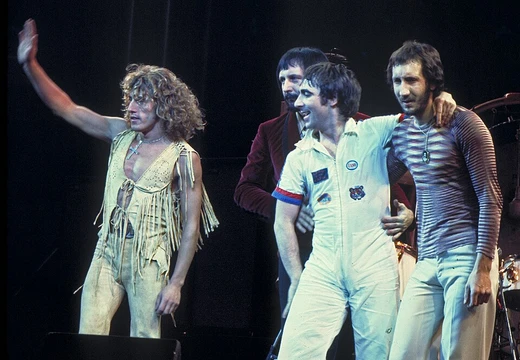
Glyn Johns
The engineer who made the early Who sessions sound so great.

via Wikipedia: Glyn Johns · see source
Glyn Thomas Johns (born 15 February 1942) is an English recording engineer and record producer. With producer Shel Talmy he engineered many of the early records by the Who, such as "My Generation". In 1971, Johns reunited with the Who for the first time since the mid-1960s, this time as a co-producer, to work on what became the album Who's Next. According to Pete Townshend in his autobiography: "Glyn was my model of what a good producer should be—someone who guides the music and creates the right sound—and there was a great mutual respect and fondness between us. We were both perfectionists in the studio who worked quickly. It was his work as an engineer on the early Who sessions ... that made them sound so great." Johns continued to work with the Who throughout the 1970s as an engineer on parts of Quadrophenia in 1973. He produced and engineered The Who by Numbers (1975) and produced early sessions for Who Are You (1978) with engineer John Astley, who later took over as producer. Johns returned to work with the group, producing and engineering 1982's It's Hard.
- Role
- Recording engineer and record producer
- First The Who session
- mid-1960s (with producer Shel Talmy)
- Primary studio (early Who work)
- not specified in source
- Signature approach
- generally preferred a live, natural approach to recording in the studio
- Other notable artists
- The Beatles, The Rolling Stones, Bob Dylan, The Kinks, Eric Clapton, The Clash,
- Status
- Alive (born 15 February 1942)
Verified Timeline
Lore & Background
In the mid-1960s, Glyn Johns engineered many of the early records by the Who with producer Shel Talmy, including "My Generation". After a gap of several years, Johns reunited with the Who in 1971 as co-producer for what became Who's Next. Pete Townshend later wrote that Johns was his model of what a good producer should be, praising his ability to guide the music and create the right sound. Townshend noted the great mutual respect and fondness between them, and that both were perfectionists who worked quickly. Townshend specifically credited Johns's work as an engineer on the early Who sessions for making them sound so great. Johns continued working with the Who through the 1970s: he engineered parts of Quadrophenia in 1973, produced and engineered The Who by Numbers (1975), and produced early sessions for Who Are You (1978) before John Astley took over as producer. Johns returned to produce and engineer 1982's It's Hard.
In Their Own Story
In 1971, Glyn Johns walked back into the studio with the Who for the first time since the mid-1960s. This time he was co-producer, not just engineer. The sessions would become Who's Next. Pete Townshend later wrote that Johns was his model of what a good producer should be—someone who guides the music and creates the right sound. There was great mutual respect and fondness between them. Both were perfectionists who worked quickly. Townshend credited Johns's earlier work as engineer on the early Who sessions for making them sound so great. Johns would continue with the band through the decade: engineering parts of Quadrophenia in 1973, producing and engineering The Who by Numbers (1975), producing early sessions for Who Are You (1978), and finally producing and engineering 1982's It's Hard.
Reader's Guide
Glyn Johns' work with the Who spanned from the mid-1960s through 1982. With producer Shel Talmy he engineered many of the early records by the Who, such as "My Generation". After a long gap, he reunited with the band in 1971 as co-producer for Who's Next. Pete Townshend praised Johns as his model of a good producer, citing his work on the early Who sessions as making them sound so great. Johns continued working with the Who throughout the 1970s: he engineered parts of Quadrophenia in 1973, produced and engineered The Who by Numbers (1975), and produced early sessions for Who Are You (1978) with engineer John Astley, who later took over as producer. Johns returned to produce and engineer 1982's It's Hard. Beyond the Who, Johns worked with many other major acts including the Rolling Stones, the Beatles, Led Zeppelin, the Kinks, Eagles, Bob Dylan, the Band, Eric Clapton, the Clash, Steve Miller Band, Small Faces, the Ozark Mountain Daredevils and Joan Armatrading.
Did You Know?
- Glyn Johns was one of the first independent British recording engineers to operate freelance rather than under the hire of a particular record label or studio, starting in 1965.
- Johns was the chief engineer during the Beatles' Get Back sessions for what became the Let It Be album, as documented in the films Let It Be (1970) and The Beatles: Get Back (2021).
- Johns is the father of Ethan Johns and the older brother of Andy Johns (1950–2013), all three of whom shared the same career in recording.
- In 2012, Johns was inducted into the Rock and Roll Hall of Fame, receiving the Award for Musical Excellence.
- Johns produced and engineered Eric Clapton's 1977 album Slowhand, which featured hits such as 'Lay Down Sally', 'Wonderful Tonight', and his version of J. J. Cale's 'Cocaine'.
More in Side Projects & Collaborations
Elsewhere in the The Who universe
Spotted an error? Know more?
This is a living reference — every entry is fact-audited, and reader corrections feed straight into our audit queue. Suggest an edit · See this site's audit record