The Who's Next Era
The Who shed the rock opera and found their sharpest, most electric voice.

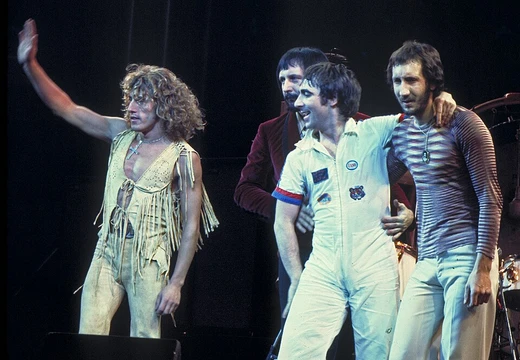
The Who's Next era encompasses the creative period surrounding the band's 1971 album of the same name, a landmark record that marked a deliberate departure from the rock-opera ambitions of Tommy (1969). For fans, this is the era where The Who found their most potent balance: Pete Townshend's increasingly sophisticated songwriting, Roger Daltrey's commanding vocal delivery, John Entwistle's muscular bass lines, and Keith Moon's volcanic drumming all converging on a collection of standalone songs rather than a narrative arc. Culturally, the era sits at the crossroads of 1960s counterculture and 1970s rock pragmatism. The band had just conquered the world with Tommy, and the pressure to replicate that concept-driven triumph was immense. Instead, they doubled down on raw, immediate rock and roll, producing what many consider their most accessible and emotionally direct record.
- Album
- Who's Next
- Year
- 1971
- Producer
- Glyn Johns
- Primary songwriter
- Pete Townshend
- Band lineup
- Roger Daltrey, Pete Townshend, John Entwistle, Keith Moon
- Preceded by
- Tommy (1969)
- Succeeded by
- Quadrophenia (1973)
Lore & Background
In the wake of Tommy's global success, Pete Townshend found himself trapped by the 'rock opera' label that critics and fans had pinned on the band. The creative brief for Who's Next was, in his telling, a rebellion against narrative: he wanted songs that hit like a punch to the gut, not chapters in a story. The result was a record of stark, emotionally exposed tracks—anthems of alienation, generational frustration, and quiet personal grief—wrapped in some of the most ferocious guitar work of the early seventies. The recording sessions, helmed by producer Glyn Johns, were marked by Townshend's relentless self-criticism and his now-fully-developed windmill guitar technique, which turned each riff into a percussive, almost violent statement. John Entwistle's bass lines grew increasingly prominent, often carrying melodic weight that a typical rock band would assign to a second guitar. Keith Moon, meanwhile, treated the drum kit as a demolition site, his playing a constant threat of controlled chaos that gave the records their unmistakable lurching momentum. Live, the era was pure spectacle. The Who's shows during this period were legendary for their sheer kinetic energy and the ritualistic destruction of instruments at the close. Audiences didn't just watch a band; they witnessed a controlled explosion, and the Who's Next material—especially the driving, repetitive structures of tracks like 'Baba O'Riley'—gave those shows a new, almost hypnotic intensity that set the stage for the stadium rock era to come.
In Their Own Story
The studio was thick with cigarette smoke and the hum of amplifiers pushed past their comfort zone. Pete sat cross-legged on the concrete floor, a battered notebook open in his lap, muttering a four-chord progression under his breath. Roger leaned against the mixing desk, arms folded, waiting for the phrase that would finally crack the song open. John stood behind his bass, tuning and retuning, his expression unreadable. Keith was somewhere in the drum booth, the muffled thud of sticks on cymbals the only sound that reached the others. Then Pete stood, walked to the amp, and played the riff three times—each one harder, each one more final. Roger uncrossed his arms. 'That's the one,' he said, and the room exhaled. They ran it again. And again. Until the tape was warm and the sound was a wall you could lean against.
Reader's Guide
The Who's Next era opens with a band that has just achieved the impossible: a rock opera that sold millions and redefined what a pop record could be. And yet, for Pete Townshend, that success felt like a cage. The creative mandate for the next record was simple and radical—write songs, not stories. No characters, no narrative arc, no spoken-word interludes. Just four men in a room, building something that hits you in the chest and lets go. Musically, the era is defined by a return to directness. Townshend's songwriting strips away the theatrical scaffolding of Tommy in favor of tight, emotionally raw structures. The guitar work becomes more percussive, more rhythmic, each strum a deliberate strike. Entwistle's bass grows bolder, often carrying the melodic lead in a way that was unusual for the format. Moon's drumming remains a force of nature, but it's channeled into service of the song rather than its own spectacle. Culturally, the band sits at a hinge point. The psychedelic excess of the late sixties is fading; the lean, muscular rock of the early seventies is arriving. The Who's live shows during this period—famous for their destructive finales and relentless energy—become a template for the stadium rock that will dominate the decade. The lineup remains the classic four-piece, but the internal dynamics are shifting: Townshend's songwriting dominance is now absolute, and the band's identity is increasingly inseparable from his vision. By the era's close, the stage is set for Quadrophenia, where Townshend will return to narrative form—but with the sharpened, hardened songcraft that Who's Next forged. The band that entered this period as 'the rock opera guys' emerged as something harder, more immediate, and more dangerous.
Did You Know?
- Pete Townshend wrote virtually every song on the album, marking the era as the height of his solo songwriting dominance within the band.
- The album was a conscious rejection of the 'rock opera' format; Townshend deliberately chose standalone songs over a narrative structure to push back against the label critics had attached to Tommy.
- The band's live performances during this period were renowned for their ritualistic instrument destruction, a tradition that had become a signature element of their shows by the early seventies.
- John Entwistle's bass playing on the record is notably more melodic and prominent than on earlier Who material, often carrying harmonic and lead-guitar duties that other bands would assign to a second guitarist.
More in Eras & Timeline
Elsewhere in the The Who universe
Spotted an error? Know more?
This is a living reference — every entry is fact-audited, and reader corrections feed straight into our audit queue. Suggest an edit · See this site's audit record