The Mod Era
Sharp suits, scooters, and a guitar that sounded like a siren—London's fastest band was born in the mod scene.

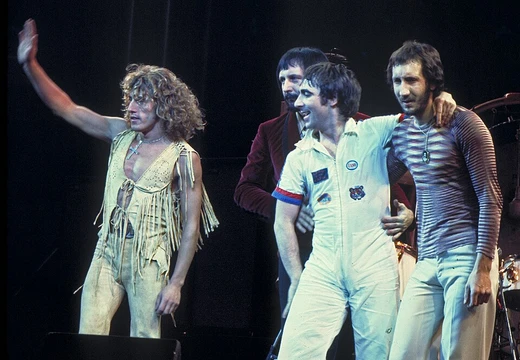
The Mod Era is the formative period in The Who's story, spanning roughly 1964 to 1966, when the young London band cut their teeth in the electric, fashion-obsessed world of the mod subculture. Dressed in sharp raincoats and tailored suits, blasting through American R&B and British beat with a ferocity that set them apart, the four-piece became the musical voice of a generation that prized speed, style, and a certain cool defiance. This era established the band's identity: the explosive live energy, the power-chord guitar language, the interplay between Roger Daltrey's wailing vocals and Keith Moon's chaotic drumming, and the songwriting spark that would later grow into rock operas. For fans, it is the period of 'I Can't Explain,' 'Substitute,' and the raw, snarling 'My Generation'—the sound of a band still finding its voice but already sounding like no one else.
- Period
- Mid-1960s (approximately 1964–1966)
- Core members
- Roger Daltrey (vocals), Pete Townshend (guitar), John Entwistle (bass), Keith Moon (drums)
- Musical roots
- American R&B, British beat, early rock and roll
- Cultural scene
- London mod subculture
- Management
- Kit Lambert and Chris Stamp
- Defining sound
- Power chords, driving rhythms, snarling vocal delivery
Lore & Background
The mod world of early-1960s London was a tight, stylish ecosystem of clubs, cafés, and scooter gangs where fashion was as important as the music. The Who—still finding their footing after their brief stint as The High Numbers—slotted into this world with an almost violent energy. Where other beat groups played polite set pieces, these four lads tore through the charts with a physicality that made audiences grab the tables. Townshend's windmill guitar stroke, Entwistle's bass lines that locked in like a heartbeat, and Moon's drumming that seemed to come from a different dimension created a live experience that was as much a physical event as a musical one. The songs of this period carried the mod ethos in their bones: the restless, anxious energy of 'I Can't Explain,' the working-class swagger of 'Substitute,' the defiant youth of 'My Generation.' These were not polished studio artifacts but captures of a band that was still young, still hungry, still figuring out who they were. The mod scene gave them an audience, a visual identity, and a cultural language of speed and style that they would carry forward even as the fashion fad faded. As the mid-1960s gave way to the late ones, the mod scene began to dissipate, but the musical foundations laid during this era—Townshend's songwriting ambition, the band's commitment to live spectacle, the four-way interplay that made them more than the sum of their parts—remained. The Mod Era was the crucible. Everything that followed, from rock operas to stadium rock, was forged in its heat.
In Their Own Story
The rain hadn't stopped for three days, but nobody in the Koko cared. The air was thick with cigarette smoke and the smell of wet wool, and the mod kids packed the floor in their raincoats and sharp little hats, swaying to a rhythm that hit you in the sternum before your ears caught it. Pete stood at the front, his white suit gleaming under the stage lights, and when he hit that first power chord the whole room seemed to inhale. Roger's voice came in like a shout from the back of a crowded pub—raw, urgent, a little scared. Keith's drums were less a beat and more a weather system, and John's bass locked it all into something that felt inevitable. For three minutes and forty seconds, the world outside the club didn't exist. Then the last chord rang out, the feedback swirled, and the crowd roared like they'd heard a secret. Pete looked at the others, and for a moment none of them spoke. They didn't need to. They knew what they were. They just hadn't had a name for it yet.
Reader's Guide
The Mod Era begins in 1964, when a scrappy London beat group called The High Numbers rebranded as The Who under the management of Kit Lambert and Chris Stamp. The name change was accidental—a misprint on a gig poster—but it stuck, and with it came a new identity. The band threw themselves into the mod scene with full commitment: sharp suits, raincoats, Vespa scooters, and a setlist built on American R&B and British beat. They played the small London clubs night after night, building a reputation for a live show that was almost aggressive in its intensity. Musically, this was the period when Townshend's power-chord vocabulary and windmill technique crystallized, when Entwistle's bass became a melodic anchor, and when Moon's drumming found its signature chaos. The songs were short, punchy, and loaded with a restless energy that mirrored the mod lifestyle: 'I Can't Explain,' 'Substitute,' '14 Till Late.' They were not yet the rock opera architects they would become, but the seeds were there—Townshend's narrative instincts, the band's instinct for drama. By 1966, the mod fashion fad was fading, and the band was pushing beyond it. 'My Generation' captured the last gasp of that youthful defiance, and the transition toward the late-1960s experimental period was already underway. The Mod Era ended not with a bang but with a slow shift in direction, leaving behind a sound and a spirit that would define The Who for decades to come.
Did You Know?
- The band's name came from a misprint on a gig poster that listed them as 'The Who' instead of 'The High Numbers,' and the error stuck.
- Pete Townshend's iconic windmill guitar stroke was developed partly as a way to play power chords while keeping his hands free from the audience's reach during moshing.
- The mod scene's fashion—sharp suits, raincoats, and scooter culture—gave the band a visual identity that was as recognizable as their sound, and it influenced how they presented themselves on stage and in photos.
- Keith Moon's drumming style, which blended jazz-influenced fills with raw rock energy, was shaped in part by the tight, fast tempos demanded by the mod club scene where sets were short and the energy had to stay high.
More in Eras & Timeline
Elsewhere in the The Who universe
Spotted an error? Know more?
This is a living reference — every entry is fact-audited, and reader corrections feed straight into our audit queue. Suggest an edit · See this site's audit record