The My Generation Period
Four young men, one generation's fury, and a windmill that never stopped spinning.

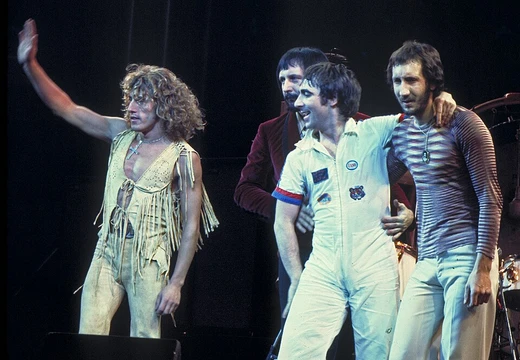
The My Generation Period marks The Who's explosive emergence as the definitive voice of Britain's mod subculture, spanning roughly 1964 to 1966. In this formative stretch, the four-piece—Roger Daltrey, Pete Townshend, John Entwistle, and Keith Moon—transformed from a scrappy club act into a national phenomenon, channeling the restless energy of a generation that felt the post-war establishment had no room for them. The era is anchored by the 1965 single and album of the same name, which crystallized the band's identity: fast, furious, and defiantly self-aware. Culturally, this period positioned The Who at the intersection of pop craftsmanship and raw stage theatrics. They were not yet the rock-opera architects of the late 1960s, but the seeds were already being sown in Townshend's increasingly theatrical guitar work and the band's willingness to destroy their instruments on stage. For fans, this era represents the purest distillation of The Who's identity before ambition and spectacle took over.
- Key album
- "My Generation" (1965, debut studio album)
Lore & Background
The mod world of early-1960s London was a tight-knit ecosystem of sharp suits, Vespa scooters, and a specific brand of cool that valued rhythm and attitude over volume. The Who slotted into that world with a ferocity that set them apart. Where other mod bands played tight, polished pop, The Who brought a chaos that felt almost accidental—Moon's drumming was a controlled explosion, Entwistle's bass lines were so thick they seemed to vibrate the floor, and Daltrey's voice carried the particular anguish of a teenager who had been told the future was secure and believed none of it. Townshend's windmill guitar stroke, which became the band's visual signature, emerged during this period as both a physical outlet for his frustration with conventional rock technique and a deliberate stage gesture. It was less a musical innovation than an emotional one: a way to say, with his whole body, that the rules of the genre had been outgrown. The song "My Generation" itself, with its clipped, almost spoken delivery and its famous closing lines, functioned as a generational declaration. It was not a protest song in the folk-tradition sense; it was a diagnosis. The establishment had a future planned for them, and they were telling it, politely and then not-so-politely, that they had other plans. The album that bore the song's name captured the band in a state of creative flux. Tracks ranged from the mod-slick to the deliberately rough, reflecting a group still deciding what they wanted to be. The production was clean enough for radio but retained enough grit to feel lived-in. For the fans who filled the small London clubs where The Who played, the experience was less a concert and more a shared exhalation—four lads doing, in real time, what the songs said they needed to do.
In Their Own Story
The Marquee was packed the way it always was on a Friday, but tonight the air felt different. Daltrey stood at the mic with his hands in his pockets, watching the crowd sway to the last chord of the previous set. Townshend was already winding the guitar strap over his shoulder, his jaw set in that particular way that meant he was about to do something reckless. Entwistle tuned his bass one more time, a ritual, a prayer. Moon sat behind the kit, tapping a rhythm on the snare that matched his heartbeat, eyes half-closed, grinning at nothing. Then the downbeat hit. The first chord of "My Generation" cut through the smoke and the noise and the smell of cheap beer, and the room contracted. Daltrey's voice came in low, almost conversational, and every head in the venue turned toward the stage as if the singer had spoken directly to them. By the second verse, the windmill was already spinning, a blur of blonde hair and maple wood, and the crowd was no longer watching—they were inside it. Moon was already in the red, his sticks a staccato rain. Entwistle's bass was a physical force you felt in your sternum. And when the final line landed, quiet and cutting, the silence that followed lasted exactly one second before the room detonated into applause. Townshend set the guitar on its stand, looked at the crowd, and said nothing. He didn't need to. They already knew whose generation it was.
Reader's Guide
The My Generation Period is the band's origin story told in three- and four-chord bursts. Musically, it sits squarely in the mod-pop tradition: tight arrangements, jangly guitars, and vocal harmonies that owe a debt to the Kinks and the Small Faces. But The Who's version always carried a voltage that kept it from settling into mere polish. Keith Moon's drumming was the wild card, the element that made a three-minute pop song feel like it might tear itself apart before the final bar. Culturally, the band was inseparable from the mod identity. The sharp suits, the scooters, the specific brand of working-class cool that London's streets produced in the early sixties—all of it fed into the songs. "My Generation" was not just a track; it was a badge worn by a subculture that defined itself partly in opposition to the rockabilly generation that had come before. The key turning point of the era was the shift from club act to national act, accelerated by the management of Kit Lambert and Chris Stamp, who understood that The Who's strength was not just the music but the spectacle. The instrument-smashing, the windmill, the sheer physicality of the performance—these became as important as the riffs. By the end of the period, the band was no longer playing to fill a slot in a club circuit; they were building toward something larger, something that would eventually become the rock opera. The My Generation era was the spark. Everything after was the fire.
Did You Know?
- "My Generation" was originally the B-side to "I Can't Explain" in 1965, and it was audience demand at live shows that eventually elevated it to the band's defining anthem.
- Pete Townshend's windmill guitar stroke was partly a physical response to frustration with conventional right-hand technique, and it became so associated with the band that it effectively became their visual logo before
- The album titled "My Generation" in the UK was released under the simpler title "The Who" in the United States, a common practice of the era that sometimes confused American fans about which record was which.
- The band's managers Kit Lambert and Chris Stamp were themselves part of the mod scene and helped shape The Who's image and stagecraft, treating the group less as musicians and more as a performance entity.
More in Eras & Timeline
Elsewhere in the The Who universe
Spotted an error? Know more?
This is a living reference — every entry is fact-audited, and reader corrections feed straight into our audit queue. Suggest an edit · See this site's audit record