The Tommy Period
A broken boy finds salvation in pinball, and The Who reinvent what rock music can be.

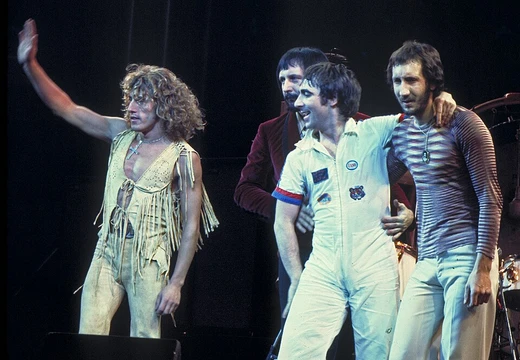
The Tommy Period marks the era in which The Who transcended their mod-era rock-and-roll identity and became the architects of one of rock music's most ambitious narrative works. Centered on Pete Townshend's 1969 rock opera Tommy, this stretch of the band's history saw four musicians—Roger Daltrey, Pete Townshend, John Entwistle, and Keith Moon—transform a story about a deaf, blind, and mute boy into a cultural phenomenon that reshaped what a rock group could do on stage and in the studio. Spanning roughly from the late 1960s through the mid-1970s, the Tommy Period encompasses the album's creation and release, the band's extended live performances of the full narrative, and the 1975 Ken Russell film adaptation. It is the period that cemented The Who's reputation as serious, forward-thinking artists and laid the narrative groundwork for later works like Quadrophenia.
- Tommy (film) lead actor
- Roger Daltrey
Lore & Background
Tommy tells the story of a young boy who, after witnessing his father's murder at the hands of his mother's lover, Frank, is told by his mother and Frank that he 'didn't see, hear, or say anything.' This traumatic directive causes Tommy to withdraw completely from the world—becoming psychologically deaf, blind, and mute. His parents, desperate to reach him, try everything: religious gurus, pop-psychology charlatans, a traveling carnival. What finally cracks open his silence is a pinball machine, and the boy becomes a sensation, a champion, a commodity. The narrative then follows his rise through pinball fame, his exploitation by his family and a carnival, and his eventual cult-like following, culminating in his bittersweet awakening. It is a story about isolation, the machinery of fame, and the difficulty of genuine human connection. Musically, the Tommy album is a tour de force of the band's sound at its most dynamic: Daltrey's baritone carries the emotional weight of the narrative, Townshend's guitar work ranges from delicate fingerpicking to explosive power chords, Entwistle's bass lines anchor each scene with melodic gravity, and Moon's drumming pushes from tender brushwork to thunderous crescendos. Songs like the pinball sequence, the carnival scenes, and the climactic free-singing finale each feel like distinct theatrical acts stitched into a single continuous journey. Culturally, Tommy arrived at a moment when rock music was hungry for narrative depth. It gave audiences a character to follow, a story to argue about, and a stage show to experience in its full two-hour sweep. The 1975 film, with its hallucinatory visuals and Oliver Reed's magnetic, wounded performance as Frank, extended the story into a new medium and introduced the narrative to a generation that had not yet experienced the live shows. Together, the album, the stage performances, and the film made Tommy a touchstone for what a rock band could accomplish beyond the three-minute single.
In Their Own Story
The stage is dark except for a single spotlight on a pinball machine. The boy sits cross-legged on the floor, eyes closed, fingers moving with a precision that seems almost mechanical. The balls clatter and bounce. The crowd is silent. Then a flash—suddenly he's on a stage, a microphone shoved into his face, a manager's hand gripping his shoulder too tightly. The lights are blinding. The noise is a wall. He pulls away, stumbles into the wings, and presses his palms flat against the cold brick. Through the plaster he can still hear the pinball machine, somewhere in the dark, still clicking. Still playing. Still the only voice that makes sense.
Reader's Guide
Before Tommy, The Who were the definitive mod-era band: fast, loud, and bound to the three-minute single. The Tommy Period shattered that template. Townshend, restless and ambitious, began sketching a narrative that would let the band tell a continuous story across an entire album. The result, released in 1969, was a work that demanded the listener sit still, follow a character, and feel the weight of each scene. It was a risk—rock audiences were not yet accustomed to two-hour conceptual arcs—and the band knew it. The live Tommy shows became a rite. Audiences experienced the boy's silence, his awakening, his rise, and his fall in real time, with the band cycling through every register of their sound. The performances were physically exhausting, a marathon of dynamics that separated The Who from every other act on the bill. Keith Moon's drumming, Roger Daltrey's vocal range, and Pete's guitar work all found new purpose in service of the narrative. The 1975 Ken Russell film extended the story into cinema, giving Oliver Reed's Tommy a haunted, physical presence that the album could only imply. By the time the film arrived, the band's story had already evolved toward Quadrophenia, but Tommy remained the fulcrum—the moment The Who stopped being a band that wrote songs and started being a band that built worlds.
Did You Know?
- Pete Townshend has expressed a long-standing ambivalence toward the 'rock opera' label for Tommy, preferring to think of it as a narrative rock show rather than a formal opera in the classical sense.
- The 1975 Tommy film directed by Ken Russell used a deliberately hallucinatory, expressionist visual style rather than a straightforward biographical approach, reflecting the internal, psychological nature of the story.
- The band's live Tommy performances in the early 1970s were extended, multi-act shows that could run well over an hour, making them one of the most physically demanding sets in rock history.
- The story of Tommy is widely understood to draw on Townshend's own anxieties about fame, artistic isolation, and the music industry's tendency to consume its creators.
Frequently Asked Questions
What is The Who's Tommy Period?
It refers to the stretch of the band's career, roughly from the late 1960s into the mid-1970s, defined by the creation and cultural impact of their 1969 rock opera Tommy. During this era, the four-piece lineup of Daltrey, Townshend, Entwistle, and Moon moved well beyond mod-era rock and roll into ambitious theatrical storytelling.
Who wrote the Tommy rock opera?
Pete Townshend conceived and wrote the entire work, crafting both the narrative and the music that became the band's defining artistic statement. His vision of a deaf, blind, and mute boy finding redemption through pinball anchored The Who's identity for the rest of the decade.
What is the story of Tommy about?
At its core, Tommy follows a trauma-shocked boy who has shut out all sight, sound, and speech, and who eventually discovers a kind of spiritual awakening through the game of pinball. The narrative traces his rise from a broken child to a messianic figure, making it one of rock's earliest sustained character arcs.
When was the Tommy album released and did it become a film?
The double album hit shelves in 1969, and a feature film adaptation directed by Ken Russell followed in 1975, starring Oliver Reed as the title character. Together, the two releases cemented Tommy as a multi-medial cultural event rather than just a record.
Why do fans consider the Tommy Period so important to The Who's legacy?
It marks the moment the band stopped being a loud, fast mod group and started treating rock as a vehicle for sustained narrative and theatrical spectacle. That leap in ambition set a template for concept albums and arena-scale live shows that influenced virtually every progressive and stadium-rock act that followed.
More in Eras & Timeline
Elsewhere in the The Who universe
Spotted an error? Know more?
This is a living reference — every entry is fact-audited, and reader corrections feed straight into our audit queue. Suggest an edit · See this site's audit record