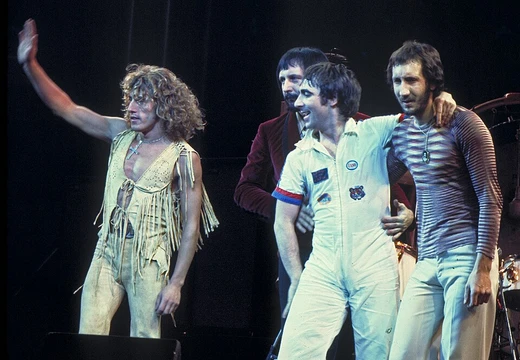
The Who's Back Tour Era
When the amps crackle back to life, a generation holds its breath and a wall of sound roars.

The Who's Back Tour Era refers to the period in which the legendary British rock band The Who returned to the stage after a significant hiatus, reuniting surviving members with a new supporting musician to carry forward the band's decades-long legacy. This era sits at the intersection of nostalgia and reinvention, as a band that has defined rock music since the mid-1960s confronts the reality of loss, aging, and the passage of time while still delivering the thunderous wall-of-sound performances that made them iconic. For fans, the 'Back Tour' framing captures a recurring theme in The Who's story: the band has repeatedly paused, reformed, and returned to touring, each cycle marking a new chapter in a narrative that stretches back to the Mod era of 1960s London. The era is less about a single concert and more about the cultural weight of a band choosing to step back into the spotlight after a period of silence.
- Band origin
- London, England
- Formed
- 1964
- Genre
- Rock / Hard rock / Progressive rock
- Surviving original members
- Roger Daltrey (vocals), Pete Townshend (guitar)
- Hall of Fame induction
- 1990 (Rock and Roll Hall of Fame)
- Signature sound
- Power chords, wall of Marshall amplifiers, extended rock operas
Lore & Background
The Who's identity has always been built on cycles of departure and return. From the Mod swagger of the mid-sixties through the sprawling rock operas of Tommy and Quadrophenia, the band's story has been one of creative ambition colliding with the chaos of rock-and-roll life. The 'Back Tour' era, in the broader sense fans use it, represents the band's stubborn refusal to let the story end. Roger Daltrey and Pete Townshend have repeatedly chosen to pick up their instruments and walk back onto the stage, not out of obligation but out of a genuine belief that the music still needs to be played live, in front of a crowd, with the feedback screaming and the crowd singing every word. Each return has carried a different emotional weight, a different set of memories, and a different audience that arrived carrying its own relationship to the songs. Culturally, these reunion tours have become events that span generations. A teenager who discovered 'Baba O'Riley' on a streaming service sits in the same arena as a fan who saw the band in 1973, and both feel the same electric jolt when the opening power chord hits. The band's ability to bridge that gap—between the Mod past, the punk and new-wave present, and whatever comes next—is what makes each 'back' tour feel like a small resurrection.
In Their Own Story
The dressing room smells of old leather and cold coffee. Pete is tuning his guitar for the third time, the familiar twang of the strings settling under his fingers. Roger enters, adjusts his mic stand, and says nothing for a long moment. They don't need to. They've been saying things with their hands, their music, their silences for decades. The stage manager calls the cue. They walk out into a roar that feels like the walls of the world are peeling back. The first chord hits and the floor shakes, and for a few minutes, none of the years matter. It's just the sound, the light, and the thousand voices breathing together in the dark.
Reader's Guide
The Who's story is not a single arc but a series of returns, each one redefining what the band means to the world. The Mod era of the mid-sixties established their identity: sharp suits, power chords, and a restless energy that turned London's clubs into pressure cookers. The rock-opera period of the late sixties and early seventies—Tommy, then Quadrophenia—pushed them into a new territory where a single album could tell a full story, and the live shows became theatrical events with pyrotechnics and elaborate staging. The post-Moon years brought a quieter, more introspective sound, and the band's touring became more sporadic. Hiatuses stretched longer. Reunions felt harder-won. Each time they announced a tour, the cultural conversation shifted: Was this the last one? Would the sound still land? The answer, every single time, was yes—but differently. The audience aged. The songs accumulated new layers of meaning. The 'Back Tour' era, in its latest incarnation, carries the particular weight of post-Entwistle uncertainty. The bass chair, once permanently occupied, now belongs to a new pair of hands, and the audience watches to see whether the groove still locks. It does. The wall of sound still rises. And the crowd still sings, because that's what The Who have always asked of them: not to listen, but to participate.
Did You Know?
- The Who's signature 'power chord' technique, built on the E5 and A5 shapes struck with a downstroke, became one of the most imitated guitar sounds in rock history and helped define the hard-rock genre.
- The band's 1969 rock opera Tommy was so ambitious that it initially confused some radio stations, who didn't know how to program a concept album that ran over forty minutes.
- Roger Daltrey and Pete Townshend have been the constant creative core of the band for over sixty years, outlasting drummers, bassists, and entire musical movements while keeping the group's identity intact.
- The Who's live performances in the 1970s were so physically destructive that they frequently smashed instruments on stage, a tradition that became part of their myth as much as their music.
More in Eras & Timeline
Elsewhere in the The Who universe
Spotted an error? Know more?
This is a living reference — every entry is fact-audited, and reader corrections feed straight into our audit queue. Suggest an edit · See this site's audit record