The Balls Period
Four kids, four amps, and the absolute nerve to tear the stage to splinters.

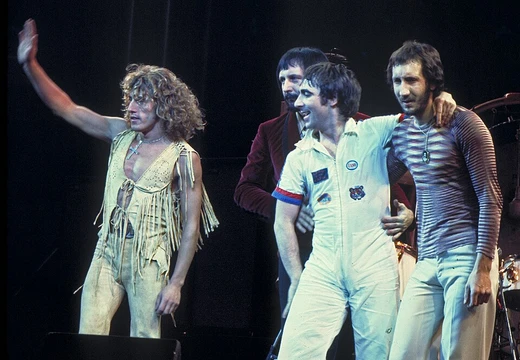
"The Balls Period" is a fan-coined shorthand for The Who's mid-1960s era of unapologetic aggression, roughly spanning 1965 through 1966. It captures the window in which the band—Roger Daltrey, Pete Townshend, John Entwistle, and Keith Moon—forged their identity as the loudest, most confrontational rock act in Britain, trading polished pop for wall-of-sound power chords, deliberate stage destruction, and a swagger that made audiences and record executives alike squirm. In the broader narrative of the band's career, this period is the crucible. Everything that followed—the rock operas, the stadium shows, the mythos of "The Who" as a force of nature—grew out of the raw, almost feral energy these four channeled in smoky London and provincial clubs. Fans who use the term "balls" are celebrating the sheer audacity: the willingness to be loud, to be rude, to break things, and to refuse to be anything other than themselves.
- Band
- The Who
- Approximate span
- 1965–1966
- Key members
- Roger Daltrey, Pete Townshend, John Entwistle, Keith Moon
- Cultural context
- British Mod scene, post-Beatles rock
- Signature sound
- Power chords, driving four-on-the-floor rhythms, theatrical vocals
- Record label (UK)
- Track Records / Decca
- Legacy
- Blueprint for punk, hard rock, and stage-as-performance-art
Lore & Background
The period is inseparable from the Mod subculture that adopted The Who as its sonic avatar. In 1965 London, the Mods were the new working-class aristocracy—sharp suits, scooters, a taste for R&B and soul—and The Who's music, with its driving rhythms and Pete Townshend's snarling delivery, became the soundtrack to that identity. The band's early singles and the 1965 album *My Generation* crystallized a sound that was less about melody than momentum: Townshend's downstroke power chords, Entwistle's bass lines that locked in with Moon's thunderous kit, and Daltrey's voice swinging between a croon and a howl. What made the period truly legendary, however, was the stage. What began as Moon accidentally smashing a drum kit evolved into a ritualized destruction of guitars, amps, and drum hardware at the close of every set. It was not mere pyrotechnics; it was a statement. In a music business that expected bands to be polished products, The Who were saying, in the most literal way possible, that the music mattered more than the gear, and that the performance was a one-time, unrepeatable event. Audiences felt the sawdust on their faces. It was communion. Culturally, the band also embodied a generational defiance that resonated well beyond the Mod scene. Their lyrics—angry, sarcastic, uninterested in the status quo—spoke to a Britain still processing the post-war consensus. The "balls" of the period name refer to this: the collective nerve of four young men who walked into a room full of suits and said, essentially, "We're going to be loud, we're going to be rude, and you're going to love it."
In Their Own Story
The air in the club tasted of cheap beer and hot valve heads. Four hundred kids pressed against the barrier, Mod suits and leather jackets mingling in the haze, and the house lights died to a single amber glow. Keith Moon set his sticks on the rim of the snare and looked at Pete, who was already winding up the windmill. The first downstroke hit the crowd like a physical blow—*chug-chug-chug-chug*—and Roger's voice cut through the wall of sound with a line that made the back row shout it back before they'd even heard the words. John's bass was a subsonic thump you felt in your molars. The set built, gear by gear, toward the moment Moon kicked his kick drum off the stand, Pete fed his guitar into the amp until it screamed, and the four of them looked at each other with that particular grin—the one that said *this is the best part*. The final chord rang out, feedback swelled, and Moon swung his stick at the hi-hat stand. Metal shrieked. The crowd roared. And in the wreckage of broken wood and snapped strings, the four of them simply walked off, leaving the silence to do the talking.
Reader's Guide
The period opens in the summer of 1965, when The Who, still finding their footing after the Beatlemania wave, began recording with a ferocity that surprised even their label. The power chord—Townshend's downstroke, stripped of arpeggios and ornament—became the band's signature, a sound that said less and hit harder than anything on the charts. Culturally, the Mod movement gave the band a tribe. Their songs became anthems for a generation that wanted to feel seen, angry, and fast. The stage destruction, initially accidental, became ritual by the end of the year, transforming every gig into a one-night-only event that no recording could fully capture. The turning point came as the band's reputation outgrew the small clubs. They began playing larger venues, the destruction grew more elaborate, and the music grew more ambitious. By the end of the period, the foundations were laid: the four-piece template, the theatrical live show, the confrontational songwriting. Everything that would become *Tommy*, *Quadrophenia*, and the stadium era was already gestating in those smoky, sawdust-covered rooms. The period ends not with a single event but with a shift in ambition—the band looking beyond the two-minute single toward something larger, something that would require a different kind of nerve.
Did You Know?
- The Who's stage destruction began somewhat accidentally when Keith Moon's drum kit broke during a 1964 gig; the band turned the mishap into a deliberate closing ritual that became their signature.
- Pete Townshend's windmill guitar-strumming move, a hallmark of the period's live shows, was partly a way to generate more volume and sustain from his equipment in smaller clubs before amplification technology caught up.
- The band's early association with the Mod subculture was so strong that their music and style became inseparable from the movement's identity in mid-1960s Britain, influencing fashion, media, and youth culture well beyon
- John Entwistle's bass playing during this era was notable for its percussive, almost drum-like attack, a technique that helped the four-piece lineup sound as full as bands with dedicated rhythm sections.
More in Eras & Timeline
Elsewhere in the The Who universe
Spotted an error? Know more?
This is a living reference — every entry is fact-audited, and reader corrections feed straight into our audit queue. Suggest an edit · See this site's audit record