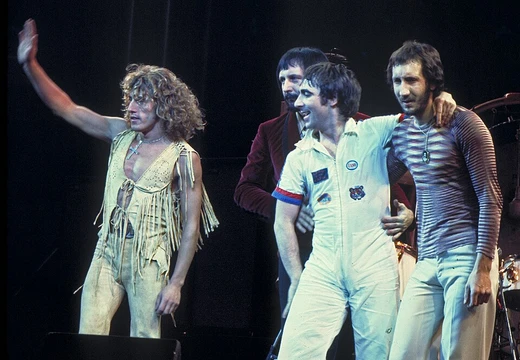
John "Rabbit" Bundrick
The man behind the keys who shaped four decades of Who thunder without ever taking the mic.

John 'Rabbit' Bundrick was the keyboardist who, without ever holding a formal seat in the band, became one of The Who's most valued musical partners across more than four decades. Where Roger Daltrey, Pete Townshend, and the drummers carried the four-piece identity, Bundrick supplied the organ swells, piano flourishes, and early synthesizer textures that gave albums from *Who's Next* through *Endless Wire* their fuller, more cinematic sound. His role was that of a trusted collaborator rather than a member: he sat at the back of the stage, wove his parts into the mix, and let the Who's thunder do the talking. For fans, 'Rabbit' is the quiet architect of the band's sonic palette on several key albums from the early seventies onward—a name that appears in the credits of many, though not all, of their studio records.
- Role
- Keyboardist / Session collaborator
- Affiliation
- The Who (non-member regular)
- Nickname
- Rabbit
- Primary instruments
- Organ, piano, synthesizers
- First major Who album
- Who's Next (1971)
- Collaboration span
- Early 1970s through the 2010s
- Band status
- Never an official member
Lore & Background
In the Who's orbit, Bundrick occupied a peculiar and beloved niche. The band's public identity was built on four-piece rock-and-roll mythology—vocals, guitar, bass, drums—yet by the time *Who's Next* entered the studio, a fifth musician's hands were already on the organ, adding the gospel-tinged pads that made 'Baba O'Riley' feel like a cathedral of electricity. He was there, uncredited in the band's mythology but present in the sound, a ghost in the machine who never demanded a spotlight. Through the *Quadrophenia* sessions and the *The Who by Numbers* era—on which he did not play—Bundrick's keyboard work on other albums provided the harmonic bed over which Townshend's guitar riffs and Daltrey's vocal lines could soar. He adapted to the band's shifting moods: the baroque ambition of the mid-seventies, the synth-heavy experiments of *Face Dances*. Each album found a slightly different 'Rabbit,' but always one who served the song first. By the 1990s and into the 2010s, when the Who reassembled for *Endless Wire*, Bundrick's presence in the credits served as a quiet continuity thread—a reminder that the band's sound, however much it evolved, still carried the fingerprint of the man who had been pressing keys in the background since the early seventies.
In Their Own Story
The back of the stage smelled of sweat and hot tube amps. Bundrick adjusted the Leslie speaker's speed, felt the organ's hum vibrate through his fingertips, and waited. Daltrey was mid-shout, Townshend was winding up for a power chord, and the crowd was a single roaring animal. Then, on the bridge, the guitar dropped out and the organ bloomed—warm, slightly detuned, filling the gap like steam filling a room. For eight bars, the whole stadium belonged to the man in the back row. Then the drums crashed in, the feedback screamed, and Rabbit was invisible again, exactly where he wanted to be.
Reader's Guide
The Who's keyboard chair was never a permanent seat, but Bundrick filled it so consistently that fans treat him as a fifth pillar. His collaboration began in the studio around 1970–71 and extended through live performances, giving the band's sound a harmonic depth that pure guitar-and-drums could not achieve. On *Who's Next*, his organ and piano work underpinned the album's most anthemic tracks; on *Quadrophenia*, his playing helped stitch together the suite's shifting moods. Beyond the Who's core output, Bundrick's session work with other artists—most notably The Hollies in the late sixties and early seventies—gave him a broad vocabulary of rock and pop keyboard styles that he then filtered through the band's harder, more theatrical sensibility. He was a bridge between the jangly, melodic pop tradition and the Who's wall-of-sound aggression. His relationship with the band was professional and long-standing but never hierarchical. He did not write songs for them, did not appear in promotional materials as a member, and did not share in the touring mythology. Yet his name in the liner notes of album after album told a story of mutual trust: the Who needed his hands, and he needed their stage. It was a collaboration that enriched both sides without ever requiring a handshake ceremony.
Did You Know?
- Despite contributing to several major Who studio albums from the early 1970s onward, Bundrick was never listed as a band member and never shared the stage-billing of the four-piece lineup. His involvement was intermitten
- His nickname 'Rabbit' was used informally within the band and in studio credits, distinguishing him in a world full of keyboardists.
- He contributed keyboard work to the *Quadrophenia* suite, helping to create the album's sweeping, almost orchestral feel without any actual orchestra.
Frequently Asked Questions
Who is John "Rabbit" Bundrick?
He is the keyboardist who served as The Who's go-to session player for over four decades, handling organ, piano, and synthesizer parts on their studio and live work. Despite never holding a formal band seat, he became one of their most trusted musical partners from the early 1970s into the 2010s.
Was Rabbit Bundrick an official member of The Who?
No. He occupied the role of a long-standing collaborator rather than a member, sitting at the back of the stage and weaving his keyboard parts into the mix while the four-piece lineup of Daltrey, Townshend, and the drummers remained the band's public identity.
What instruments did Rabbit Bundrick play on Who recordings?
His primary contributions were organ swells, piano flourishes, and early synthesizer textures. These layers gave tracks a fuller, more cinematic quality that the core guitar-and-drums setup alone could not achieve.
Why is Rabbit Bundrick considered important to The Who's sound?
He supplied the harmonic and textural glue that turned The Who's raw rock into the layered, orchestral-adjacent productions fans associate with their classic albums. Without his keyboard work, records like *Who's Next* and *Quadrophenia* would lack much of their signature depth and sweep.
More in Side Projects & Collaborations
Elsewhere in the The Who universe
Spotted an error? Know more?
This is a living reference — every entry is fact-audited, and reader corrections feed straight into our audit queue. Suggest an edit · See this site's audit record