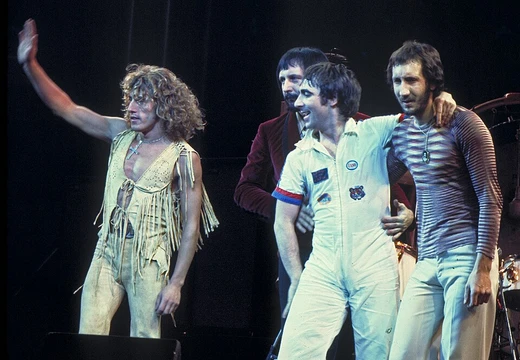
My Generation
One tear, one smash, one generation's refusal to be told no.

"My Generation" is the explosive 1965 single by The Who that became the definitive anthem of the mod era and the band's first UK number-one hit. Written by Pete Townshend and delivered with ferocious energy by Roger Daltrey, the track channels the restless, defiant spirit of a generation that refused to be told how to live. Its signature refrain and its closing drum fill made it an instant live weapon, and it remains one of the most recognizable riffs in rock history.
In the broader arc of The Who's career, the song marks the moment the band transitioned from a sharp-dressed R&B act into a force that could command a room with a single chord. It set the template for everything that followed — the aggression, the theatricality, the relentless drive — and gave the mod subculture a soundtrack that still crackles with urgency decades later.
- Artist
- The Who
- Written by
- Pete Townshend
- Lead vocal
- Roger Daltrey
- Released
- 1965
- UK chart peak
- #1
- Key
- E minor
- UK album
- My Generation
Lore & Background
The song grew out of a specific, almost accidental moment. In 1964, during a live performance, Pete Townshend's guitar strap snapped mid-song. Rather than stop, he grabbed the instrument and hurled it to the floor in a burst of frustration that the crowd read as pure theatrical genius. The image lodged in his mind, and when he sat down to write the following year, that violent, liberating gesture became the song's emotional core. The signature refrain wasn't just a lyric; it was a permission slip for an entire audience to let go.
Musically, the track is deceptively simple in structure but devastating in execution. The driving riff locks the listener into a hypnotic groove, while Keith Moon's drumming builds tension wave after wave until the final, cascading fill detonates like a small explosion in the chest. Roger Daltrey's vocal delivery shifts between a sneering, almost conversational register in the verses and a full-throated, howling cry in the chorus, embodying the push-pull of youthful defiance and raw vulnerability.
The song became inseparable from The Who's live identity. At the close of every performance, Townshend would raise his guitar overhead and bring it down against the stage in a shower of wood and wire, a ritual that audiences still chant for decades later. It transformed the recording into an event, a shared act of destruction that made the audience complicit in the rebellion.
In Their Own Story
The Empire Pool, Wembley, 1964. The crowd is a sea of flat caps and parkas, packed shoulder to shoulder in the stink of sweat and cheap beer. Pete is mid-run on a fast number when the leather strap gives way with a soft, sickening *thwip*. The guitar drops. For half a second the stage goes quiet. Then he snatches it back up, looks it over, and — with no thought, no plan — drives the neck into the boards. The crack is enormous in the small room. Splinters skitter across the stage. The crowd doesn't applaud. They *scream*. Pete stands there, hands still raised, and something clicks behind his eyes. He mouths a word to himself. He'll write about this. He'll write about all of them. And next year, when the song comes out and the whole country howls the refrain back at him, he'll know: the generation didn't need a generation. It needed a permission slip, and a guitar to break.
Reader's Guide
My Generation appears on the 1965 UK album My Generation (in the US it later appeared on A Quick One). The hook is a tight, staccato riff rooted in E minor — a repeating figure that hits like a sprinting heartbeat. Pete Townshend's guitar chops each note with a dry, percussive attack; John Entwistle's bass punches the low end in counterpoint. Keith Moon's drums build in layered waves, each verse adding pressure, until the famous closing fill: a rapid cascade of sticks on toms and cymbals that detonates into a final crash.
Roger Daltrey's delivery is the emotional engine. Verses land in a low, sneering, almost spoken register. The chorus erupts into a full-throated howl that turns the signature refrain into a communal shout.
Live, the song became The Who's signature weapon. At the final crash, Townshend would lift his guitar and smash it against the stage in a spray of splinters and coiled wire — a ritual the crowd chanted for, and one of rock's most enduring visual symbols.
The song has been covered across genres, sampled in hip-hop and electronic tracks, and remains a touchstone for writing about 1960s youth rebellion. It is, in many ways, the sound of a generation declaring itself into existence.
Did You Know?
- The song was inspired by a 1964 live performance in which Pete Townshend's guitar strap broke, prompting him to hurl the instrument to the floor in a burst of frustration.
- Keith Moon's closing drum fill on the track became one of the most imitated and referenced drum endings in rock history.
- My Generation was The Who's first UK number-one single, cementing their status as a mainstream force in 1965.
- The guitar-smashing at the song's close became a fixed ritual in The Who's live set, with audiences chanting for the moment and Townshend sometimes smashing multiple guitars in a single show.
More in Signature Songs & Riffs
Elsewhere in the The Who universe
Spotted an error? Know more?
This is a living reference — every entry is fact-audited, and reader corrections feed straight into our audit queue. Suggest an edit · See this site's audit record