Live at Leeds
Raw, roaring, and recorded in the eye of the storm—The Who at their most electric.

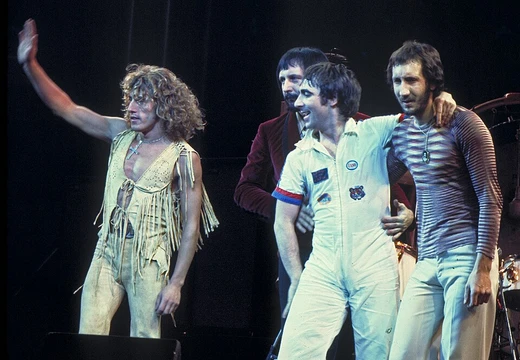
Live at Leeds is a 1970 live album by The Who, recorded at the Leeds University Union in northern England. It captures the band during a volatile stretch of their career—just after a temporary breakup and on the cusp of a new creative chapter—and is widely regarded as one of the most powerful and energetic live rock recordings ever committed to tape. The album's significance lies not just in the songs it preserves but in the feeling it radiates: a four-piece at the edge of combustion, locked in a feedback-soaked, drum-driven maelstrom that studio recordings of the era simply could not replicate. For fans, it remains the definitive document of The Who as a live organism rather than a collection of studio compositions.
- Artist
- The Who
- Type
- Live album
- Recorded
- 1970
- Venue
- Leeds University Union
- Producer
- Pete Townshend
- Label
- Track Records
Lore & Background
By early 1970, The Who were a band under extraordinary strain. A temporary split had fractured the group, and the creative pressures of producing Tommy and Who's Next had left the members exhausted and irritable. Yet when they took the stage at the Leeds University Union, something alchemical happened. The confined acoustics of the union hall amplified every snare crack, every guitar feedback squeal, and every syllable of Roger Daltrey's belting vocals into a wall of sound that the multi-track recording captured with startling clarity for its era. Pete Townshend, who had been steering the band's studio output with increasing authority, also oversaw the recording. The result is an album that feels less like a 'document' and more like an event you are standing inside of. The transitions between songs are abrupt, the dynamics swing from whispered verses to full-throttle crescendos, and the interplay between John Entwistle's bass and Keith Moon's drums is a constant, thundering undercurrent that gives the whole performance its physical weight. In the broader arc of The Who's discography, Live at Leeds sits between the theatrical ambition of Tommy and the experimental direction of Who's Next, offering a snapshot of the band as a raw, four-piece rock unit before they fully embraced their studio-producer identity. It is, for many listeners, the album that proves why they were never just a studio act.
In Their Own Story
The air in the union hall is thick with cigarette smoke and the low murmur of three hundred students who have been waiting since midday. The lights dim to a bruised amber. A single feedback howl tears through the PA, and then the bass drops in—Entwistle's fingers finding the low E like a man gripping a rope over a cliff. Moon's sticks hit the toms in a rolling, percussive thunder that you feel in your sternum before your ears register the pitch. Daltrey steps to the mic, jaw set, and the first word he spits out cracks the room open. Townshend's guitar cuts through like a blade drawn across a wire. For forty-five minutes, the building does not exist. There is only the four of them, locked in a feedback loop of sound and fury, and the crowd swaying in a single, breathing mass. When the last chord rings out and the silence that follows lasts a full three seconds, the eruption that hits the stage is almost physical—a wall of noise and hands and shouted names that no recording could ever hold.
Reader's Guide
Live at Leeds is a sonic world built on proximity and pressure. Unlike the layered, multi-instrumental studio productions of the era, this album sounds like four musicians in a small room, each one fighting for space in the mix. The bass is foregrounded, almost aggressive in its presence, while the drums occupy a wide, thundering field that never fully resolves into a groove—it's propulsion, not rhythm. The thematic arc moves from the anthemic and confrontational (the early, shouted numbers) through the more melodic and reflective material drawn from the band's recent studio work, and back out into pure, unadorned rock energy. There is no narrative, no concept—just a setlist that breathes and shifts with the band's mood in the moment. Production-wise, Townshend's ear is evident in the balance: nothing is buried, nothing is over-polished. The imperfections—the slight bleed between mics, the occasional vocal strain, the cymbal that rings a beat too long—are the album's texture. It sits in The Who's universe as the counterweight to their studio work: where Tommy is a painted canvas and Who's Next is a laboratory, Live at Leeds is the forge, hot and unrefined, where the metal is still glowing.
Did You Know?
- The album was recorded during a period when the band had temporarily split up, making the performance a rare moment of reunion and creative reconnection.
- Pete Townshend produced the recording, applying the same meticulous attention to the live session that he brought to the band's studio work.
- The Leeds University Union venue, with its relatively small capacity and intimate acoustics, contributed to the album's notably dense and immediate sound compared to larger arena recordings of the period.
- The recording was made using a multi-track approach that was unusual for live albums at the time, allowing for a level of post-recording balance and clarity that set it apart from single-mic live captures.
More in Albums & Discography
Elsewhere in the The Who universe
Spotted an error? Know more?
This is a living reference — every entry is fact-audited, and reader corrections feed straight into our audit queue. Suggest an edit · See this site's audit record